Quartz countertops are everywhere. They are durable, low maintenance, consistent in appearance, and available in hundreds of colors and patterns. For homeowners and designers, engineered quartz can seem like the perfect countertop material.
But quartz has a serious hidden problem.
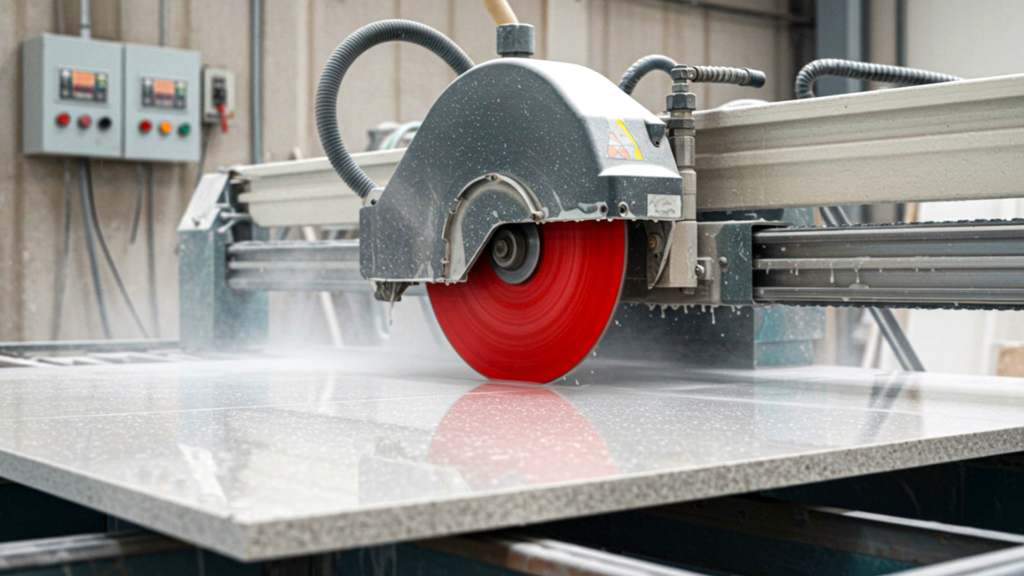
The biggest concern is not usually the finished countertop in your kitchen. The danger happens when engineered stone slabs are cut, drilled, ground, or polished. Those fabrication steps can release respirable crystalline silica dust, which can cause silicosis, an incurable and sometimes fatal lung disease.
So are quartz countertops dangerous? The answer is complicated.
What Are Quartz Countertops Made Of?
Quartz countertops are not solid natural stone. They are engineered stone, made by combining crushed quartz with resins, pigments, and other additives.
That manufacturing process creates a hard, dense, consistent slab. It also means many quartz countertops contain high levels of crystalline silica. The problem starts when those materials are cut or ground and tiny silica particles become airborne. These particles are small enough to travel deep into the lungs.
Why Engineered Quartz Is a Problem
When countertop workers cut sink openings, polish edges, drill faucet holes, or trim slabs, they may be exposed to dangerous silica dust. Without proper wet cutting, ventilation, dust collection, respirators, and safety practices, that exposure can be severe.
This is why engineered stone has become a major occupational health concern. Australia banned engineered stone benchtops, panels, and slabs in 2024 because of the risk to workers.
Alternatives to Quartz Countertops
There is no perfect countertop material. Every option has tradeoffs in cost, durability, maintenance, repairability, aesthetics, and environmental impact. Still, if you want to avoid high-silica engineered quartz, consider:
- Porcelain Slabs: Porcelain is heat-resistant, stain-resistant, and available in many stone-look patterns. It still requires skilled fabrication, but it is becoming one of the most popular alternatives to quartz.
- Natural Stone: Granite, marble, quartzite, and soapstone each have pros and cons. Some require sealing, and some still contain silica, but they are different from high-silica engineered quartz.
- Stainless Steel: Stainless steel is durable, hygienic, heat-resistant, and recyclable. It scratches, but in many spaces that patina becomes part of the appeal.
- Butcher Block: Wood countertops need maintenance, but they are warm, repairable, and very different from stone or resin-based surfaces.
Bottom Line
If you already have quartz countertops, there is no reason to panic. But if you are choosing a new countertop, it is worth considering lower-silica alternatives and asking how the material will be fabricated.
A truly high-performance material should not only look good and last a long time. It should also be safer for the people who make, install, and work with it.