Prefabrication, modular construction, offsite construction, and industrialized construction are often used interchangeably. But they don’t mean the same thing. Here’s how these methods differ, where they overlap, and why the distinctions matter.
Walk through a modern construction site, and you might encounter prefabricated wall panels, fully assembled bathroom pods, modular building sections, or structural components manufactured hundreds of miles away.
These products all have something in common, but are prefabricated, modular, offsite, or industrialized?
The answer depends on what is being manufactured, where it’s produced, and how it’s assembled.
Industrialized Construction: The Big Picture
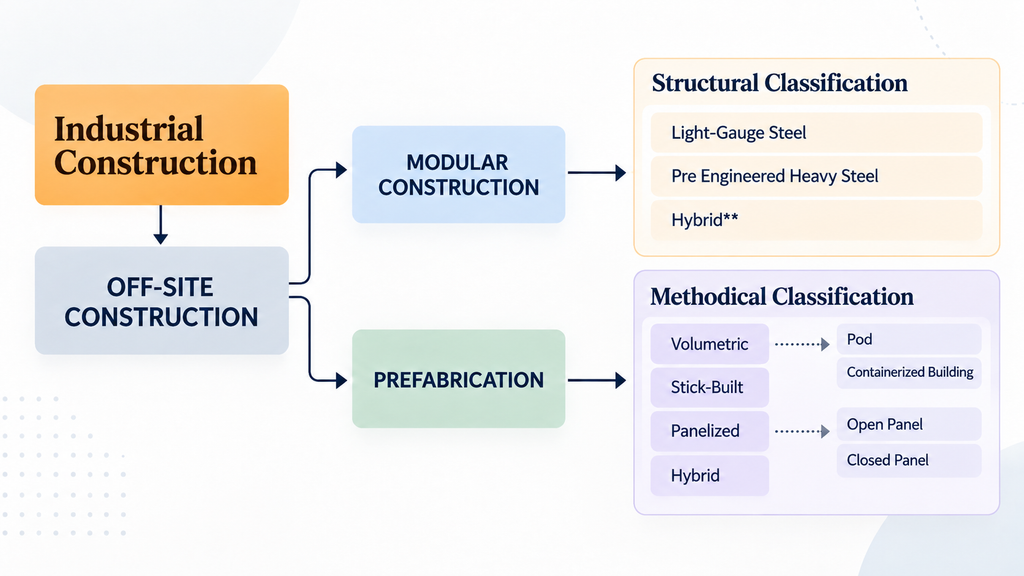
Industrialized construction is the broadest concept in this discussion. It refers to applying manufacturing principles and systematic production processes to construction.
Importantly, industrialized construction doesn’t have to happen inside a factory.
For example, a contractor might use standardized installation sequences, prefabricated components, and repetitive workflows to improve productivity on a traditional construction site.
Offsite Construction: Where the Work Happens
Offsite construction refers to building components or assemblies being manufactured or assembled somewhere other than their final installation location.
Examples include:
- Wall and floor panels manufactured in a factory.
- Bathroom pods assembled with plumbing, fixtures, and finishes.
- Mechanical and electrical racks fabricated offsite.
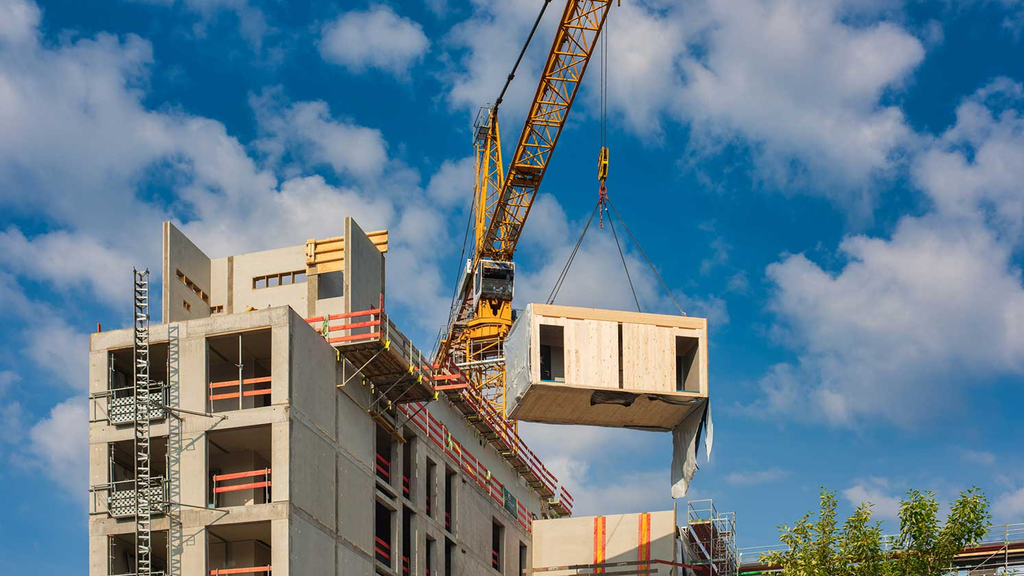
- Entire room-sized modules transported to a construction site.
Once completed, these assemblies are delivered to the project and integrated into the building. Offsite construction can reduce the amount of work performed on a busy construction site. It can also allow some manufacturing activities to take place while site preparation and foundations are underway.
Prefabrication: Building Components Before Installation
Prefabrication is the process of manufacturing or assembling building components before installing them in their final location.
Common examples include engineered roof trusses, precast concrete panels, preassembled electrical racks, exterior wall panels, and prefabricated staircases.
Consider a traditional exterior wall. Workers might install studs, sheathing, insulation, weather barriers, and windows in separate stages on the construction site. With prefabrication, some or all of these elements can be assembled into a single wall panel in a factory. The completed panel is then delivered and installed using a crane.
Modular Construction: Building in Three Dimensions
Modular construction is a building approach that uses standardized or repeatable modules assembled into a larger structure.
In the context of offsite construction, the term most commonly refers to volumetric modular construction: three-dimensional building sections manufactured offsite and transported to their final location. Unlike flat wall panels, volumetric modules contain usable space.
And not every building described as modular is made from fully finished room-sized boxes. The term is also used more broadly for standardized systems assembled from repeatable units.
The Future of Construction Isn’t Just About Moving Work Into Factories
The bigger opportunity is rethinking how buildings are designed and produced.
Traditional construction often relies on fragmented workflows, customized details, and sequential onsite activities. Industrialized approaches encourage greater coordination between designers, manufacturers, suppliers, and contractors.
But the objective shouldn’t be to prefabricate every component or turn every building into a collection of identical boxes. It should be to use the right construction method for the right application.
The real innovation isn’t simply building somewhere else. It’s designing and organizing construction so that the entire process works better.